Teacher Salaries in Private Schools: A Simple Monthly Payroll Process
A clear monthly routine for teacher and staff salaries in Pakistani private schools — attendance, leave, deductions, advances, salary slips and records.
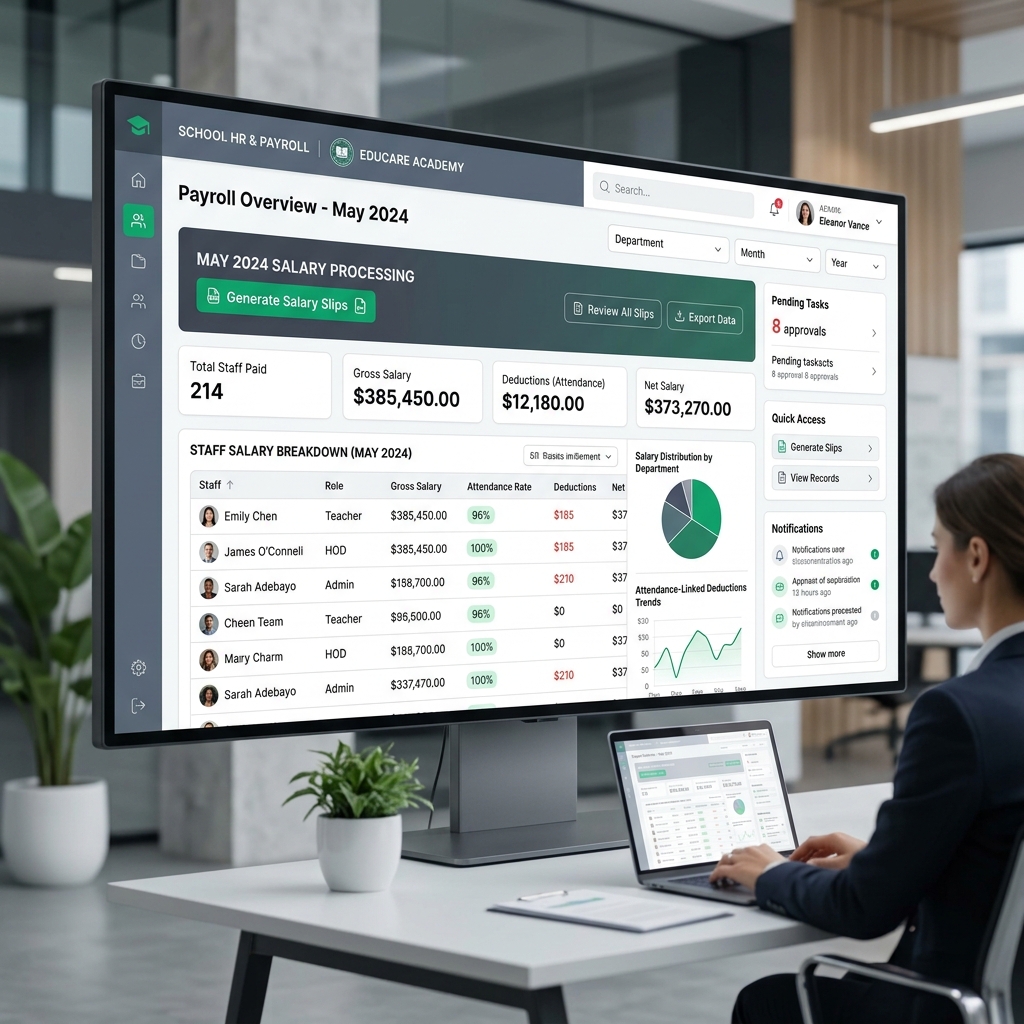
Salary day is when a school's relationship with its teachers is tested. A late or wrong salary, with no explanation of the deductions, does more damage to staff morale than almost anything else. A simple, written monthly routine fixes most of it.
Step 1: Close attendance on a fixed day
Pick a cut-off — for example the 25th — and close staff attendance for the month on that day. Count:
- days present,
- approved leaves (casual, sick),
- unapproved absences,
- late arrivals, if your policy deducts for them.
Share the attendance summary with each teacher before salaries are made. Most disputes disappear when teachers see the numbers first.
Step 2: Apply the rules you wrote down
Every deduction should come from a rule the teacher already knows:
| Item | Example rule |
|---|---|
| Unapproved absence | Salary ÷ 30 per day |
| Late arrivals | 3 lates = half a day |
| Advance taken | Recovered in equal monthly parts |
| Leave allowance | 2 casual leaves per month without deduction |
If a rule isn't written down, don't apply it this month — write it down for next month.
Step 3: Add allowances and other pay
Add anything extra: transport allowance, extra classes, exam duty, or a commission if your institute pays instructors a share of course fees. Keep each item on its own line so the teacher can see where the total comes from.
Step 4: Give a salary slip
A salary slip should show:
- basic salary,
- each allowance,
- each deduction with the reason,
- advance recovered and remaining,
- net salary paid, and the payment date and method.
A slip turns "why is my salary less?" into a two-minute conversation instead of an argument.
Step 5: Pay on the same date every month
Teachers plan their own household expenses around salary day. Paying on the same date every month, even if the school's own fee collection is late, builds trust. If a delay is unavoidable, tell staff before the date, not after.
Step 6: Keep the record
Keep each month's attendance summary, slip and payment record together. When a teacher leaves, you can settle their final dues quickly, and you have a clear history if there is ever a dispute.
Doing it with less work
For a few teachers, a spreadsheet is enough. With more staff, branches or commission-based instructors, it becomes easy to make mistakes. School Sahulat links staff attendance to salaries, handles advances and commissions, and prints a slip for every staff member from the same record.
- Payroll
- Teachers
- Salary slip
Keep reading
 Attendance
Student Attendance That Parents Trust: Marking, Absence Alerts and Monthly Reports
A simple daily attendance routine for Pakistani schools and institutes — how to mark it quickly, when to inform parents of absences, and what a monthly report should show.
2 min read
 Fees
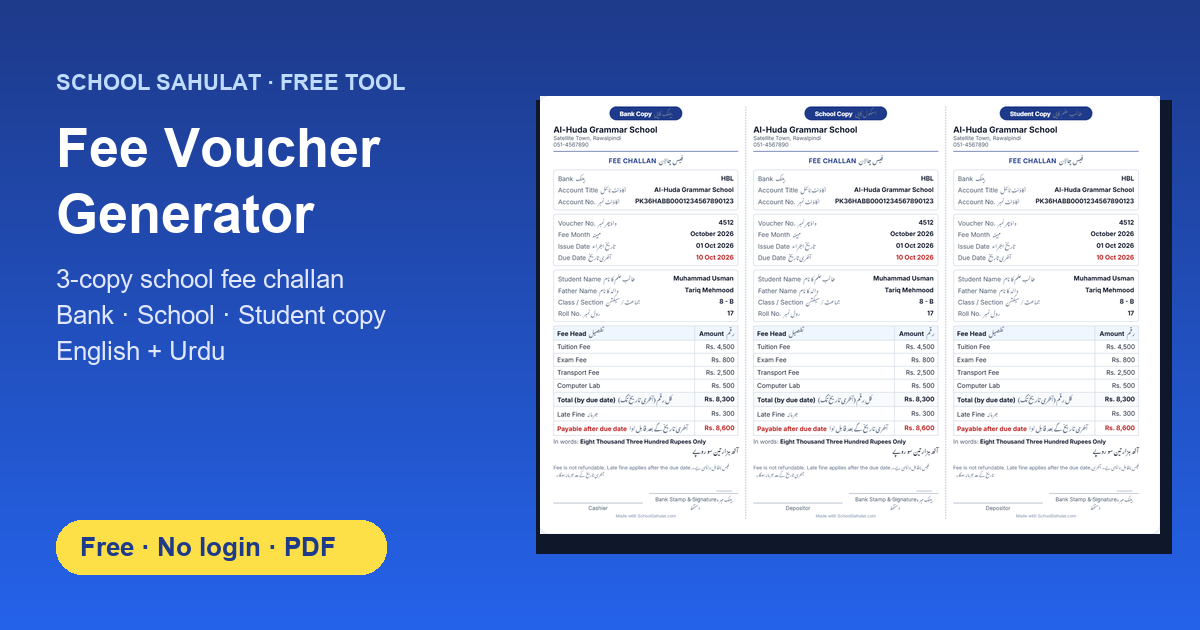
How to Make a School Fee Voucher (Challan) in Pakistan — Format and Example
What a school fee challan must include, why it has three copies, how to work out arrears and late fine, and how to make one free in English or Urdu.
3 min read